Advances in analytical methods and bioequivalence assessment science have driven the evolution of bioequivalence recommendations for locally acting inhalation products toward option-based bioequivalence frameworks, incorporating innovative in vitro, in vivo, and in silico methods as viable alternatives to comparative clinical endpoint studies. These developments represent meaningful opportunities to modernize and strengthen the development and approval of generic inhalation products. As with any emerging methodology, their novelty may give rise to questions where additional clarity could further support their implementation. This workshop will explore these opportunities with the goal of building shared understanding, refining best practices, reducing redundancies, and streamlining evaluations that will ultimately support more efficient generic development programs and timely approvals.
Attendees will gain valuable insights into the current understanding, regulatory expectations, and industry experiences with developing, validating, and using in vitro and in vivo methods included as part of bioequivalence recommendations for metered dose inhalers (MDIs) and dry powder inhalers (DPIs) without significant formulation differences with their reference standard (RS). The final session of the workshop will explore the potential for using innovative in vitro and in vivo methods in these option-based frameworks with products containing significant formulation differences with their RS. In addition to a series of expert-led presentations and panel discussions, in-person attendees will interact directly with experts from industry, academia and regulatory agencies to better understand the current practices and considerations with conducting these studies.
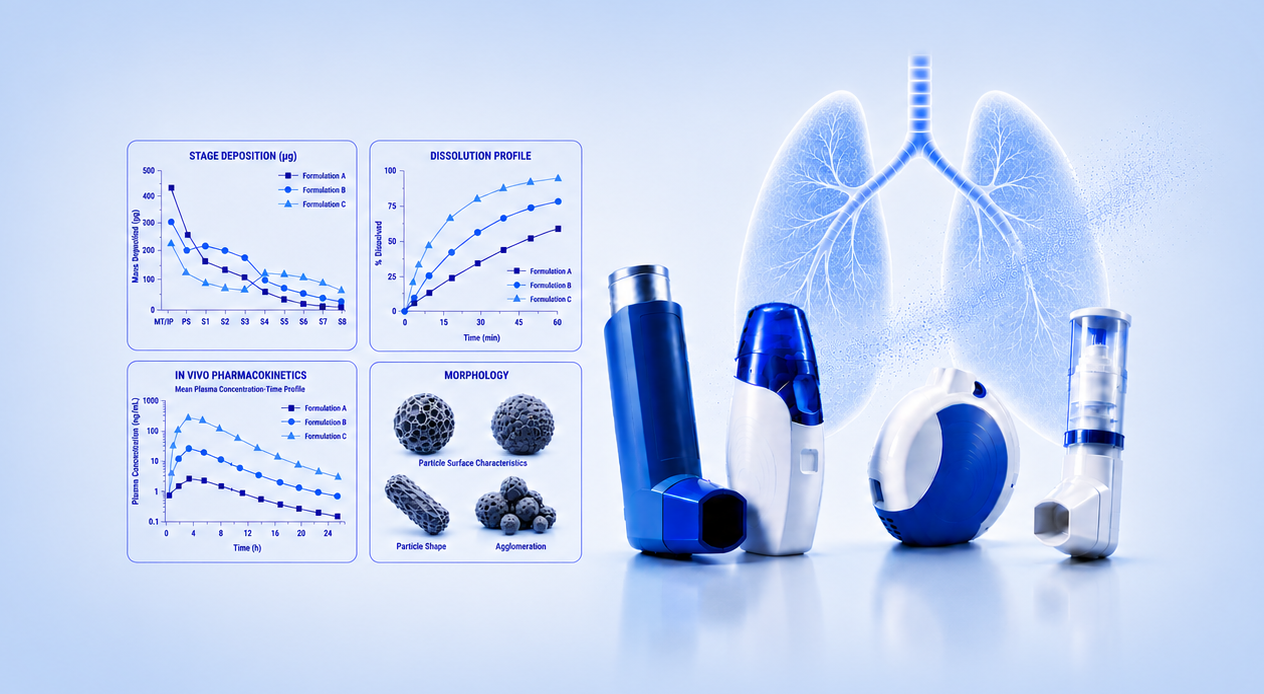
The two-day workshop is designed to discuss in vitro methods for particle size distribution, dissolution and particle morphology; the current expectations and potential alternatives to charcoal block in vivo pharmacokinetic studies; a look forward at opportunities to expand use of these bioequivalence approaches and areas for products with significant formulation differences from their RS.
Choose your experience:
VIRTUAL ATTENDANCE:
All attendees will enjoy a series of expert-led presentations and panel discussions that provide valuable insights into the current understanding, regulatory expectations, and industry experiences with developing, validating, and using in vitro and in vivo methods recommended to support demonstration of bioequivalence for MDIs and DPIs without significant formulation differences from their RS. The final session of the workshop will explore the potential for using innovative in vitro and in vivo methods in these option-based frameworks with products containing significant formulation differences from their RS. Virtual attendees will be able to:
- Attend all presentations and panel discussions
- Participate in all Q&A panel discussions by submitting questions online in real time to the speakers and panelists
- Enjoy free access to workshop recordings of presentations and panel discussions (not including the in-person-only sessions)
IN-PERSON ATTENDANCE:
In-person attendees will enjoy all the benefits of virtual attendance and, additionally, interact directly with experts from FDA, academia, industry, consulting groups, and others to deepen their understanding of current practices and considerations, regulatory expectations, and emerging trends. These high-engagement scientific interactions will be facilitated through two in-person-only sessions:
- A session dedicated to interactive discussions and candid dialogue with FDA, Industry, Academic, and other subject matter experts about scientific and regulatory challenges for complex inhalation generic products.
- A guided session for small groups of in-person attendees to elucidate and work through specific challenging issues for inhalation generic product development and assessment, including key topics related to generic MDI and DPI drug products, such as proper study development, method complications and potential remedies. Participants will also have the opportunity to contribute to a publicly available workshop report summarizing key discussion points, consensus findings, and recommendations emerging from the workshop.
Workshop Topics
- Current Bioequivalence Approaches for Inhalation Drug Products, discussing the option-based framework, current challenges and areas for clarity, and future directions for research initiatives and additional guidance.
- Revisiting Realistic Particle Size Distribution Study Designs and Analyses for inhalation products, including considerations and challenges associated with method development and analyses of realistic aerodynamic particle size distribution (rAPSD) studies.
- Expectations for Designing Sensitive Dissolution Methods, including regulatory expectations and reasoning around study development and design, considerations around method development and sample collection, and applicability of biopredictive and/or biorelevant approaches.
- Expectations and Opportunities with Particle Morphology Testing, exploring the purpose and utility of conventional and alternative methods for morphological characterization, along with considerations for multi-component formulations.
- Waivers for In Vitro and In Vivo PK Studies – Challenges and Opportunities, focusing on the applicability for partial AUC metrics in lieu of charcoal block PK studies, challenges and opportunities for additional strength(s) waivers, expectations and other considerations around in silico approaches.
- Moving Beyond Formulation Sameness – Expanding BE Options for Non-Q1 and/or Non-Q2 OIDPs, discussing the relevance of formulation sameness across inhalation products, challenges with meeting Agency recommendations, and potential approaches and/or opportunities to address uncertainties with non-Q1 and/or non-Q2 formulations.
Audience
The workshop is designed for professionals interested in advancing their understanding of regulatory science and bioequivalence strategies that can support product development, along with the performance and quality assessment of complex MDI and DPI drug products. This includes formulation scientists, analytical scientists, regulatory affairs specialists, quality control experts, and R&D professionals from industry, academia, and government.
- Virtual Attendance is ideal for those who wish to access expert presentations and panel discussions remotely, eliminate travel requirements, and have the flexibility to engage with content in real time or on demand.
- In-Person Attendance is best for participants seeking high-level engagement through collaborative small group working sessions, direct interaction with experts from FDA, Academia, Industry, and others, with opportunities for immersive learning focused on real-world challenges and problem-solving.
Registration Fees:
This workshop is FREE for virtual attendees.
- The combined cost for the two-day workshop in-person attendance and activities is:
- $350, in-person attendees – general
- $150, in-person attendees – government (must have an email ending in “.gov” to register at this rate)
For faculty and students from the University of Maryland, Baltimore, The Universities at Shady Grove, and University of Michigan, please contact CRCG (info@complexgenerics.org) regarding registration.
Continuing education (CE) credits will not be provided for attending this workshop. A certificate of attendance will only be provided to individuals attending in person, when requested.
For in-person attendees, beverages and food for breaks will be provided; Lunch will not be provided. Please visit the CRCG website regarding pre-ordering lunch instructions. Links will be provided once they are available. Orders must be placed by October 4 (5 PM ET). Also there is an onsite cafe for purchasing food or you are welcome to bring your own lunch.